
If you've started researching stone retaining wall vs wood, there's a good chance your existing retaining wall is already showing signs of trouble.
Perhaps the wall is leaning. Maybe some timbers have started rotting, the soil is washing out after heavy rain, or sections of your backyard are becoming unstable. These are common problems throughout Massachusetts, especially in neighborhoods where retaining walls were built during the 1980s and 1990s.
At 3LS Masonry & Landscaping, we've spent more than 20 years helping homeowners throughout Barnstable County, Cape Cod, Newton, Westwood, Dover, Hingham, Duxbury, Cohasset, Scituate, Plymouth, Marshfield, Chatham, and surrounding Massachusetts communities replace aging retaining walls with engineered stone systems built to last.
As a family-owned company founded in 2004, we understand that retaining walls are much more than decorative landscape features. They are structural systems designed to safely hold back thousands of pounds of soil while protecting your home, yard, drainage, and investment.
In this guide, we'll walk through a realistic homeowner scenario, explain why timber retaining wall failure happens so often in New England, and show why engineered stone has become the preferred long-term solution.
If you suspect your retaining wall may be failing, now is an excellent time to request a free consultation and discuss your options with our licensed, fully insured team. Call (774) 306-6864 to schedule your evaluation.
Many homeowners think retaining walls simply keep soil from sliding downhill. In reality, they perform a much more demanding structural job.
Every retaining wall constantly resists the weight of soil pushing against it. That pressure becomes even greater after rainstorms when water saturates the ground. This pressure is known as hydrostatic pressure, and it's one of the biggest reasons retaining walls fail.
A properly engineered retaining wall includes several critical components:
Everything begins with proper footing preparation. The wall must rest on compacted material capable of supporting its weight for decades without shifting.
Instead of packing soil directly behind the wall, professionals install clean drainage stone that allows water to move away quickly.
Drain pipes collect groundwater before pressure builds behind the structure.
This fabric separates soil from drainage stone, preventing fine particles from clogging the drainage system over time.
Good landscape grading Cape Cod and throughout Massachusetts directs surface water away from the retaining wall instead of allowing it to collect behind it. When these components work together correctly, the retaining wall remains stable through years of changing weather.
Imagine a homeowner in Westwood who purchased a home built in 1993. The backyard includes a six-foot timber retaining wall supporting a sloped lawn and patio. For years everything looked fine. Then winter after winter passed.
Eventually they noticed:
An inspection reveals what happened. Water has been collecting behind the wall for years because no proper drainage system was installed. Freeze-thaw cycles caused repeated expansion and contraction. Wood absorbed moisture season after season. Fasteners weakened. The soil became heavier. Pressure increased.
Instead of solving the structural problem, previous repairs simply replaced a few damaged timbers. Unfortunately, the hidden structural issues remained. This scenario is incredibly common throughout Newton, Dover, Hingham, and many other Massachusetts communities where timber retaining walls are reaching the end of their service life.
Wood is an attractive building material, but New England presents unique challenges.
Massachusetts winters expose retaining walls to constant freezing and thawing. Moisture enters tiny cracks within the wood. When temperatures drop, water freezes and expands. Over time, repeated expansion weakens structural integrity.
Even pressure-treated lumber eventually deteriorates when buried in constantly damp soil. Continuous exposure accelerates rot and decay.
Without effective drainage, water builds enormous pressure behind the wall. Even healthy timbers eventually struggle against these forces.
Natural settlement, erosion, and seasonal frost heave slowly shift the wall away from its original position. Once movement begins, it rarely stops without major repairs.
Although maintenance helps, most timber retaining walls have a significantly shorter lifespan than engineered stone systems. As walls age, repairs become increasingly frequent while long-term reliability continues to decline.
When comparing stone retaining wall vs wood, installation cost is only one part of the equation. The real comparison should focus on lifetime value.
Engineered stone retaining walls are specifically designed to manage substantial soil pressure. Many systems use interlocking blocks combined with proper reinforcement, drainage, and compacted backfill. This creates outstanding structural stability for challenging slopes.
Stone walls commonly outlast timber by decades when properly installed. Rather than worrying about rot, homeowners invest once and enjoy lasting performance.
Stone doesn't rot, warp, or become attractive to insects. Routine maintenance typically involves simple inspections rather than repeated structural repairs.
Modern retaining wall systems offer beautiful textures and colors that complement virtually any home. For decorative applications, stone veneer walls Massachusetts homeowners choose can coordinate perfectly with patios, outdoor kitchens, fireplaces, and entry features.
Well-designed structural backyard walls improve curb appeal while creating more functional outdoor living space. Buyers appreciate durable landscaping improvements that require little future maintenance.
One of the biggest misconceptions is that retaining walls are simply stacked blocks. Professional installation involves careful planning from the ground up.
Before construction begins, experienced contractors evaluate:
Every successful retaining wall includes properly compacted base material, engineered drainage, quality gravel backfill, geotextile fabric, and grading that moves water away from the structure.
At 3LS Masonry & Landscaping, drainage isn't treated as an optional upgrade. It's an essential part of building retaining walls that stand up to Massachusetts weather year after year. Our team also provides drainage solutions, earthwork and grading, and complete landscaping services to ensure every component works together.
Many homeowners initially hope a repair will solve the problem. Sometimes that's possible.
However, replacement often becomes the smarter investment when:
The cost to replace retaining wall systems may seem significant initially, but continuing to repair an aging timber wall often becomes more expensive over time. More importantly, delaying replacement increases the risk of complete wall failure, landscape erosion, damaged patios, unstable walkways, and costly drainage issues.
A professional inspection provides the information needed to determine whether repair or replacement offers the best long-term value. Our team offers free project consultations and personalized recommendations based on your property's specific conditions.
Many homeowners discover that replacing an aging retaining wall creates the perfect opportunity to redesign the entire backyard. Instead of completing projects one at a time, many choose a complete outdoor renovation that includes:
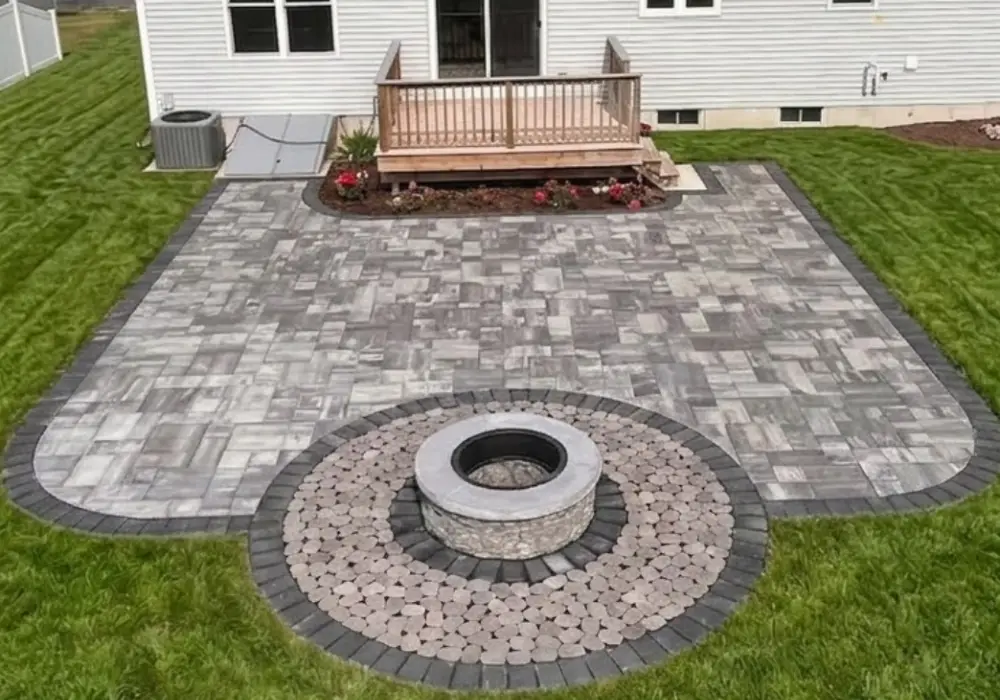
A new patio pairs beautifully with engineered retaining walls, creating additional outdoor living space for family gatherings.
New walkways improve accessibility while tying together different landscape elevations.
Updated driveway borders often complement retaining wall materials for a cohesive appearance.
Custom planting layouts soften hardscape features and improve curb appeal.
Fresh lawn installation completes the transformation after grading work is finished.
Homes with pools benefit from retaining walls that improve both safety and visual appeal.
Stone retaining walls naturally complement outdoor fireplaces and fire pits, creating inviting backyard gathering areas.
Because 3LS Masonry & Landscaping provides complete outdoor construction services, homeowners can simplify their renovation by working with one experienced contractor from start to finish. From retaining walls and stone features to grading, drainage, irrigation systems, landscaping, and masonry, every project is planned as one coordinated solution.
Choosing the right contractor matters just as much as choosing the right materials. Homeowners continue choosing 3LS Masonry & Landscaping because we provide:
When you work directly with Luiz, you'll receive honest recommendations based on what's best for your property, not a one-size-fits-all solution.
For most Massachusetts homes, yes. Engineered stone retaining walls generally offer greater durability, improved structural performance, lower maintenance, and much longer service life than timber retaining walls.
Lifespan varies depending on drainage, installation quality, and environmental conditions. In New England, moisture, freeze-thaw cycles, and soil pressure often shorten the useful life of timber retaining walls.
The answer depends on wall height, length, drainage requirements, excavation, access, and material selection. Scheduling a professional evaluation is the best way to receive an accurate estimate based on your property.
Absolutely. Professionally installed retaining walls improve safety, curb appeal, usable outdoor space, drainage, and overall landscape appearance, making properties more attractive to future buyers.
Replacement is often the better option when the wall is leaning, rotting extensively, suffering from poor drainage, or requiring repeated repairs that fail to solve the underlying structural issues.
Yes. Proper drainage is one of the most important components of any retaining wall. Without it, hydrostatic pressure builds behind the wall and greatly increases the likelihood of failure.
When professionally designed and installed with proper drainage, engineered stone retaining walls can provide reliable performance for several decades with minimal maintenance.
Choosing between stone retaining wall vs wood is ultimately about protecting your property for the long term. If your retaining wall is leaning, cracking, or showing signs of age, don't wait until minor issues become major structural repairs.
Request your free estimate today, explore engineered stone options that fit your property, and schedule your personalized consultation.
Together, we'll build an outdoor space that's as durable as it is beautiful.
Call us at (774) 306-6864
to schedule your free evaluation.